Protected: Behind the binoculars – some useful tips for getting a bit more out of your birding
Nov 24
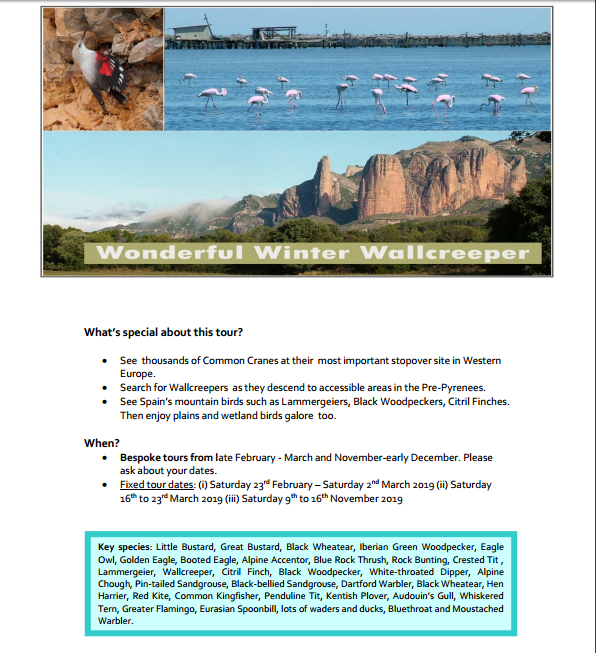
Winter is more than Wallcreepers
Is winter coming, or is it here already? Judging from our recent 6 days in the field in northeast Spain, and comparing them to what was happening in the region only the week before, it is tempting to say that winter is indeed here. The snow on the Pyrenees lies thick at the summits, and the wind is cold. However, only last week we were still drifting along on a seemingly never-ending summer, and in our birding minds this led to growing apprehension for the apparent lack of Wallcreepers in their usual wintering haunts in the Pre-Pyrenees. But all that changed in the first week in November.
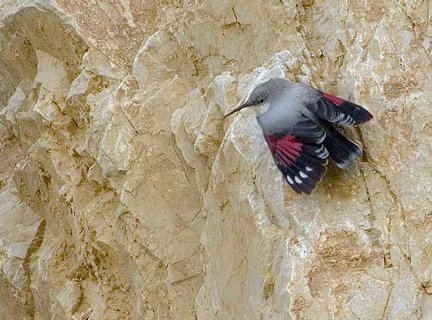
Winter Wallcreeper, Tichodroma muraria
Our first tingle of excitement with incoming wintering birds was when we stumbled on a mixed flock of Chaffinches and Bramblings on the edge of Lleida. But the Bramblings outnumbered the Chaffinches! To put that in context, sometimes we go for whole winters and might only see one or two Bramblings here.
Then, a few days later, we stopped to watch a field of Mistle Thrushes and discovered that in fact there were no fewer than 4 species of thrush hopping about in that field: Mistle, Song, Fieldfare and Redwing. Later that day and the next we came across Redwings on several occasions. Only a year ago I was thinking that Redwings were almost a thing of past winters in our part of Spain, having seen so few in the last ten years or so.
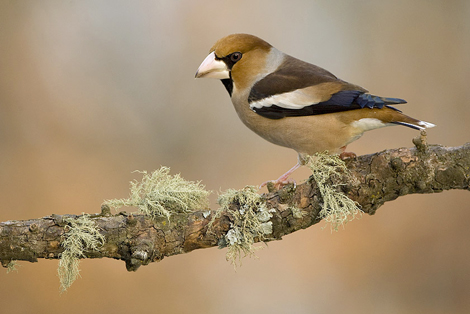
Hawfinch, Coccothraustes coccothraustes
“All we need now is a Hawfinch or two to complete the winter visitor set” I said to Erica and Jonas as we drove along after seeing the thrushes. Well, would you believe it … in under an hour we were watching several Hawfinches perched on top of dead trees, and that without making a detour from our return route to the hotel.
On a personal note the arrival of this winter weather was in the nick of time. We saw Wallcreepers at 3 different locations, one each on successive days, as well as a record number of 10 Alpine Accentors at one particular location. This was a great relief, as it meant we were not using the Wallcreeper’s name in vain when promoting our “Winter Wallcreeper Tours”.
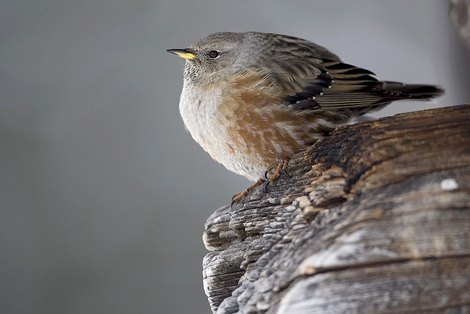
Alpine Accentor, Prunella collaris. By Franck Renard.
And then there were Robins every 50 metres along the road, little groups of Siskins calling as they flew overhead and, in the Ebro Delta, a rare Herring Gull from the north, and an even rarer Rough-legged Buzzard from the east. Well, yes, winter is here, and the birding looks like it’s going to be fun!
Spring 2017, and the good news is that the outdoor clothing company Patagonia have conceded us one of their environmental grants to help us with our “Bovera, from brown to green” project! Our primary aim is to turn an unused field into a small haven for wildlife, whilst growing organic food and promoting nature-related leisure, education and local business.
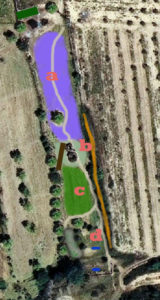
Zoning the Pou del Mano project: the original idea
a = lavendar and aromatics; b= well, chill-out area; c = vegetables; d = wildlife
One of the core premises of this project is to plant fruit trees aimed at eventually establishing a food forest, a place where fruit trees will flourish, people will enjoy the shade and picking and eating the fruit growing on the trees, birds and other wildlife will occupy and alter the new niches being created, and bushes, flowers and vegetables can be grown in the shade and open areas between the trees.
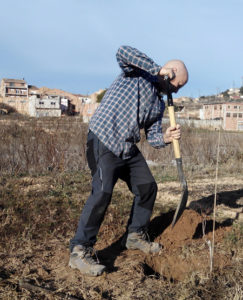
Planting a tree in Bovera
Bearing in mind that this is a harsh Mediterranean continental climate, with very low rainfall (below 400mm per year) and very high evapo-transpiration (summer maximum temperatures approach 40ºC), and that we wanted to avoid installing an irrigation system, the first task would be to select the appropriate tree species.
In the end we planted 2 or 3 of each of the following: cherry, quince, persimmon, apricot, pomegranate and fig, and half a dozen sea buckthorn. First off, the sea buckthorn were having none of it, immediately went into a sulk, and started dying. The others dragged their heels, but a quick survey 2 years later and only the original quince and the pomegranate survive.
We did our best, but obviously it wasn’t good enough. So what happened? An analysis of likely factors and explanations would be vital if we were to learn from the experience, which was our intention, rather than to give up. So as not to get too long and technical, we’ll focus on just one factor – water.
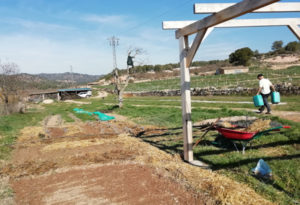
Up and down the path we go
Water and drought – even if a relatively drought resistant tree needs only 600mm of rainfall in a Mediterranean climate, when you only get between 200 and 300mm rainfall a year it doesn’t mean you can just add the extra 300 mm or so at the base of the tree (300 litres per square metre) and everything is OK. For one thing, what is the real water deficit of a particular tree in a particular area?
In other words,
(i) what is the tree’s surface area “of influence”, ie does it only extract water and nutrients from 2 or 3 square metres around the trunk?
(ii) Does the dry, unirrigated soil around that area use some of the water that you provide through capillary action, soil-dwelling organisms, invasive roots of other species?
(iii) How do you determine the most crucial moments, when the tree needs water the most?
(iv) If the temperature rises above what is “normal”, how will that affect water consumption and availability to the tree?
(v) What effect does your soil’s water retention capacity have on the ideal frequency and quantity of watering?
(vi) And what other factors can’t I think of right now?
All these are often unanswered questions that may flash through your mind as you struggle down the path with two 25-litre drums, wondering how much water to gift your trees with today.
Then when the trees start wilting you hurry to install olles (see previous Pou del Mano post). Hopes are high, they function correctly, and very soon the surrounding weeds have sent out roots to smother and command this new resource (scramble competition) before any more slow-growing competitors (trees) can get there.
But don’t despair! The new, on-site rain roof, equipped with 2,000-litre tanks and 40 m2 of rain-catching surface will spare us from having to use the mains water, even if we do have to continue watering by hand. If only it would rain. And then … it rains in November, when the trees that have survived the summer won’t thank you for your contributions.
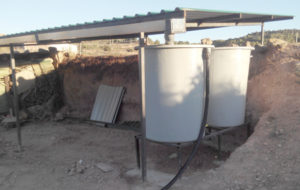
The rain roof and water tanks
So then, your pride around your ankles, you turn to irrigation, just like everybody else. The lessons of life and living.
We recommend
Iceland Awakes! An awesome spring tour.
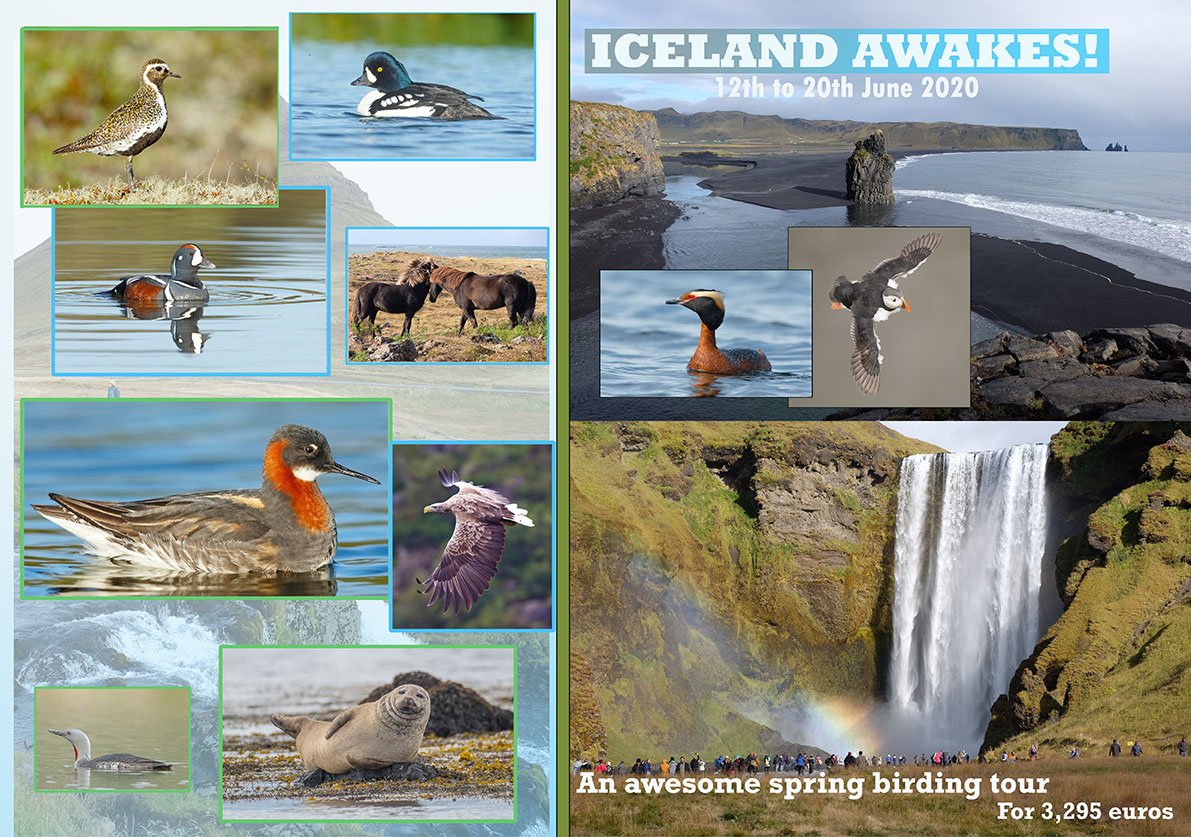
A real client review
“In September 2018, together with my non birding son, I went on a 10 day tour of Iceland led by Steve West of Birding in Spain. Steve worked tirelessly to find the birds and we had a very successful birding trip. He also managed to incorporate all the important ‘tourist sites’ and general wildlife into our trip. A very successful tour on a magical island that catered for everyone. We even got the Northern Lights. This was my third birding trip with Steve, he remains my first choice for guided trips.” – Ian, UK.
Next: Where have all the swallows gone?
The frog in the well
Aug 19
The frog in the well
A puzzle for you:
- A frog is at the bottom of a well, which is 30 feet deep (use metres if you prefer). Every day the frog climbs up 3 feet (or metres), but slides back 2. How many days will the frog need to get out of the well?
You can answer in the comments section if you think you have it. Or if you prefer, send us an e-mail.
We’re still waiting for a frog to appear, not in the well, but in the pool. So far, no frog, although we did have a whopping toad for one day. On another day, as I was filling an “olla” with water I was delighted to discover a small frog avidly swimming about inside. I let it crawl out of the top hole as I filled the olla, and didn’t replace the stone over the top of the hole, as I felt certain it would like to go back in sooner or later. That in itself gave me an idea: why not create “micro-reserves” with olles here and there, some with water and some without? Those without water would be refuges for spiders, beetles and woodlice, while those with might be encouragement for more froglets.
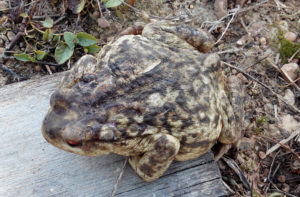
Common Toad, Bufo bufo
You can read more about “olles” here, including their function in permaculture, and how to make a terra cotta flowerpot olla:
https://wateruseitwisely.com/olla-irrigation/
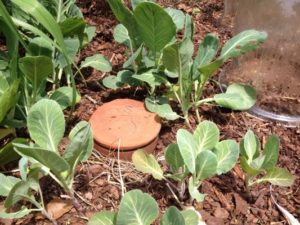
Home-made olla for watering
Like many of the gardening tasks, such as weeding, planting and the like, filling and inspecting ollas requires a fair bit of bending over. However, when bent over I don’t have to raise my head to know that one of the local Blue Tits is close, this time inspecting the nest box that I’ve put up for them on the dying persimonn tree. Last year they built a nest, but for some reason they abandoned before any eggs were laid. When I ascended to clean out the nest box there was the nest, but none of the dirt associated with a used one. I think the problem is that they are of a very nervous disposition and cannot accept my presence, even when I’m face down and bent over most of the time and only watch them through the corner of my eye!
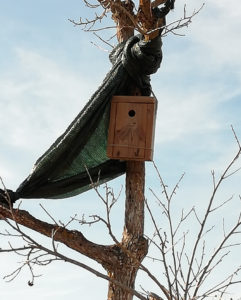
Blue Tit nest box on persimmon tree
This year they haven’t nested, despite repeated attempts by the male to encourage the female to have a look around the lovely new residence he had discovered. I think she took a dislike to the neighbours (me) and that hers was the final word. Even the shading I had put up for the box to compensate for the lack of branches and leaves was not good enough for her more refined tastes.
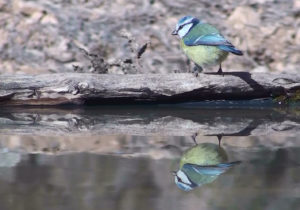
Blue Tit, Cyanistes caeruleus, at drinking pool
If you are thinking about making, purchasing and erecting a nest box for hole nesting birds such as the Blue Tit, or indeed even a considerable array of other potential birds, you really should read up well to maximize the possibilities of success. You could do much worse than to buy this book published by the BTO (British Trust for Ornithology)
https://www.bto.org/our-science/publications/bto-books-and-guides/nestboxes-your-complete-guide
At the Pou del Mano I haven’t seen much evidence of nesting birds. Certainly early in the spring we had a Corn Bunting singing almost non-stop for weeks above and around the couple of hay bales which we use for mulch, and more or less at the same time two male Sardinian Warblers were in avid pursuit of a female Sardinian Warbler. The Black Redstarts that frequented the rain roof throughout the winter were no longer there one day in mid-spring, while the singing Hoopoe from last year seems to have moved elsewhere. Golden Orioles nest in trees close to us, but not on site, and the Stone Curlew has been in fields close by for the last two breeding seasons. On the upside we’re getting a lot of interest from this year’s Little Owl juveniles, exploring the area close to where they were born, while doing their best to avoid the couple of marauding cats we try to keep off the site. A Black-eared Wheatear puts in the occasional appearance, and this year the Red-rumped Swallows seem to be a little less common than in previous years.
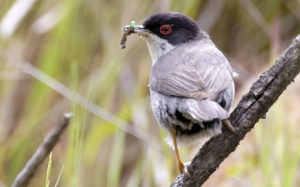
Male Sardinian Warbler, Sylvia melanocephala
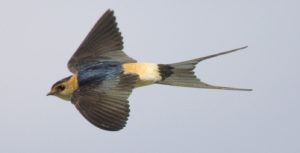
Red-rumped Swallow, Cecropis daurica
But back to the frog in the well: the Pou del Mano is actually 13 metres deep, so how long would the above-mentioned frog need to get out of the well?
Next chapter: Tree planting – dreams and realities
BIS feedback, what real people say about us
Bill W., UK, May 2019
Unlike some of the others on the trip, this was my first time birding in another country, and I thoroughly enjoyed the whole experience. However, the fact that it was so enjoyable was undoubtedly due to being in the company of you both. From the moment you picked us up from the airport, we knew we were in good hands.
Your bird knowledge Steve, I found to be extraordinary, and I would never have seen my 52 “lifers” without your help.
Also, many thanks to you both for your help with Spanish translation and pronunciation. I am now seriously considering looking for a local Spanish conversation class.
All the very best to you both, and I hope we get the opportunity to meet again in the not too distant future.
Thanks Bill!
We recommend:
Iceland awakes! An awesome spring birding tour
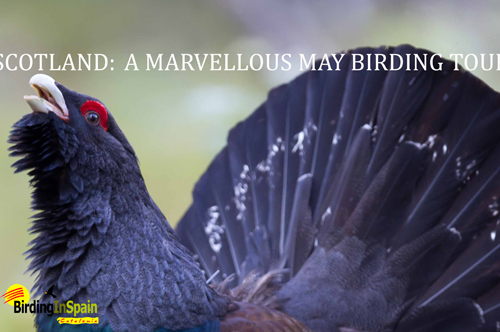
Capercaillie – Birding In Spain’s Scotland Tour
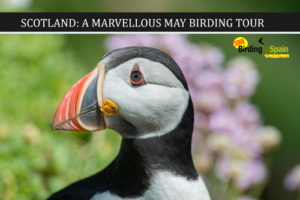
Atlantic Puffin and Marvellous May Scotland Tour
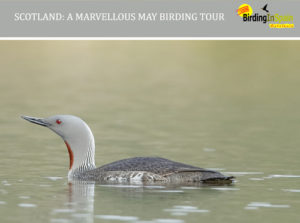
Red-throated Diver and our Marvellous May Scotland Tour
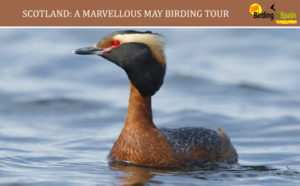
Slavonian Grebe and Marvellous May in Scotland
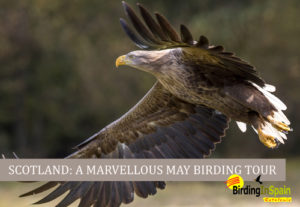
White-tailed Eagle, or Sea Eagle in Scotland
Isn’t May Marvellous? And Scotland too? Just imagine the two combined! Next year, 2020, we at Birding In Spain are running a 10-day birding and wildlife tour to get some of the best of what Scotland has to offer. You can read about it all by clicking on the link below, which will download a pdf describing the tour.
The drinking pool’s conception was easy enough, it’s being a parent of a thirsty and difficult pool progeny that’s the hard work!
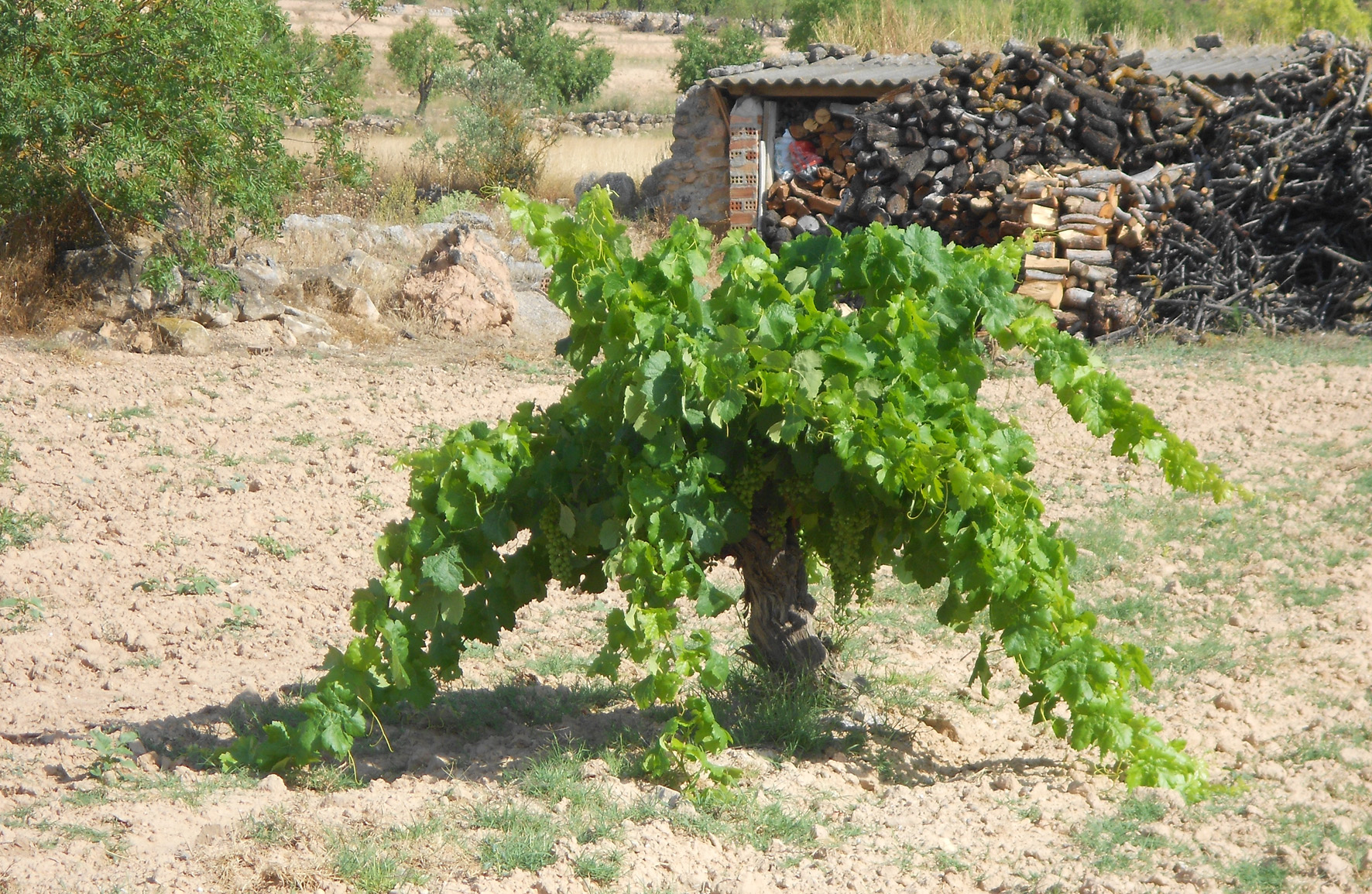
Heard it through the grapevine
Until we proposed the drinking-pool as a reality brother-in-law Jordi would come to the “Pou” with the tractor and plough the weeds a couple of times a year, and someone in the family would casually pick some of the bunches of grapes produced by decades-old grapevines. Occasionally, villagers may have visited and poked around the stone walls and fennel plants, looking for snails after a bit of rain – yes, we eat snails, and they are the same as the ones that many people poison in their gardens in the UK. What a waste! They are just delicious griddled and dipped in garlic butter!
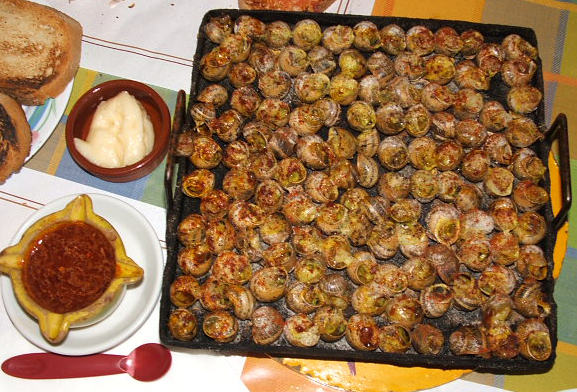
Cargols a la llauna, Lleida
Here’s a recipe for that very “Lleidatà” (from Lleida) dish, with garlic butter, salt, pepper … mmm, delicious!
But back to the drinking pool and some of the initial considerations in its imperfect design.
- Location: It should be away from human transit and hence disturbance, which narrowed down the possibilities to the far end of the plot. Uncertainty about the future use of the continuous flat area led me to site the pool in the vicinity of the big Holm Oak tree, on the small terraced slope. This choice would have consequences which will be dealt with later.
- Dimensions: The pool, for the time being at least, would have to be filled by hand. I had already learnt from previous experiences with larger pools that that in itself could be an onerous and thankless task, difficult to keep up with in the summer, when water is most needed by the birds and other wildlife. So the pool wasn’t going to be so big that it couldn’t be filled by two or three trips with a wheelbarrow laden with 25 litre water containers. However, it also had to have some depth to ensure that summer evaporation would not dry it out in no time at all.
- Shape: The final figure of 8 shape seems quirky at first sight, but makes it possible to retain at least some water in case of leakage or low refilling frequency by damming the “waist” if needed and dedicating the meagre water resources to only half of the pool.
- Construction: Dig a hole to the right depth and shape, flatten and smooth the surface, remove any sharp objects, cover with old clothes, sheets, blankets, carpets – whatever – roll out the liner, cut to measure, leaving overlap around the edges, make a ledge and fold over the edges, get some rocks and stones to weigh it down.
- Aesthetics: We used stones to overlay the edges of the liner, as there were plenty of those about. We also used burlap, but that disintegrated before too long. Leaves and other debris get in the cracks between the stones, so it’s probably best to cement them in. We also had a supply of pebbly stones which were ideal for lining the bottom of the pool.*
- Aeration: Little solar-powered aerators (made in China) seem like a good idea, but don’t have much impact and don’t last for more than one season. Think seriously about this and mosquitoes if you are in a hot climate. For us the eventual solution was to link the pool to the irrigation system and have a “jet” of water aerating the surface whenever we turn on the tap.
- Stability: The slopes needed stabilizing, and also people walking around the edges have to be catered for. Reeds cut from the field edge (see photo) were remarkably effective in preventing slope erosion over what was very loose soil on quite a steep slope.
- If you’re going to plant then the plants will need some attention. Winter shade and freezing temperatures just about polish off the plants that manage to survive the extreme heat of the summer. We’re still working on this.
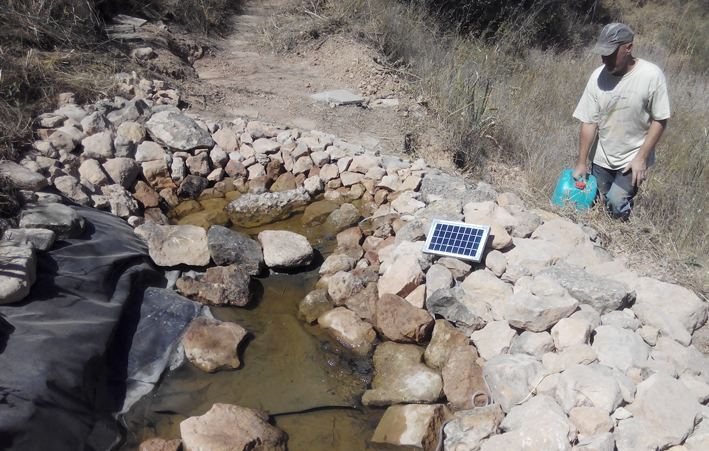
For the birds: filling the drinking pool
* The pebbles were left in a heap by Florinda’s grandfather about 40 years previously. He was too old to do heavy work on the land so spent his time removing pebbles from the ground one by one and discarding them on a pile next to the well.
That’s a lot of work, when do we start reaping the rewards? And where are the birds?
Next: Tell us about the birds and the bees
What real people say about Birding In Spain :
Jeremy Bradshaw (Liverpool, UK) – Marvellous May Tour 2019
We’ve just come back from a fantastic 7 days “Marvellous May” birding trip with Steve and Florinda in NE Spain. From our first contact to our final goodbyes at the airport, we were treated with friendly professionalism. Steve’s knowledge of bird identification is outstanding (particularly his identification by call) and his brilliant local knowledge of good bird sites enabled us to “tot up” a trip list of over 190 species including some difficult and much sought after birds, such as Dupont’s Lark, Sandgrouse and Alpine Accentor to name but a few. The hotel accommodation, in all three locations we visited, were well run and friendly with good food and well stocked bars! Would I recommend using BirdinginSpain and Steve for a guided birdwatching holiday? Yes, in a heart beat ! “
We recommend …
El Pou del Mano
Note: The translation of the title “Pou del Mano” from Catalan to English is “Mano’s Well”. “Mano” is the village nick-name of Florinda’s parents’ household, for this generation mostly applied to Salvador, Florinda’s father.
Bovera, Les Garrigues, Catalonia.
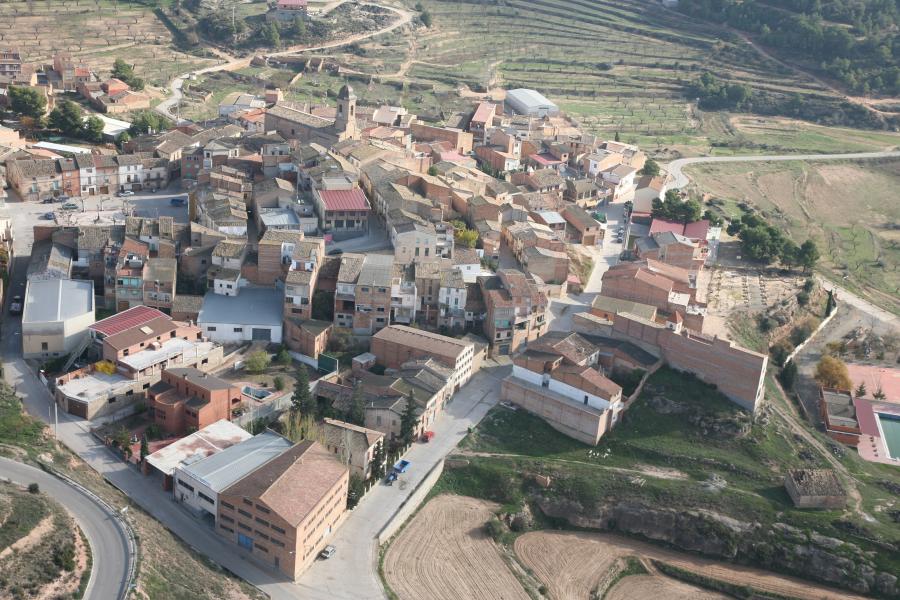
The village of Bovera in the Garrigues, Catalonia
A new chapter has opened in our lives, and it’s taking on ever increasing dimensions. In July 2016 things kicked off with my idea of building a small drinking pool for birds, down near the “pou” (well). The smallish plot, about 2,000m², once held apple and peach trees, which Salvador, my father-in-law, used to irrigate from the water he drew from a well in the middle of the plot . Rather tentatively I put the idea to Salvador and, fortunately, he had no reservations, “Do what you like with it”, he said. Even though the land had lain idle for about 30 years, after he had uprooted the drought-stricken trees, it was still a relief to me to hear those words, as I still felt like an outsider on most things related to Florinda’s village. Little by little though, the initial project would expand and take on new dimensions and provide a source of new endeavours, and some disappointments and headaches too.
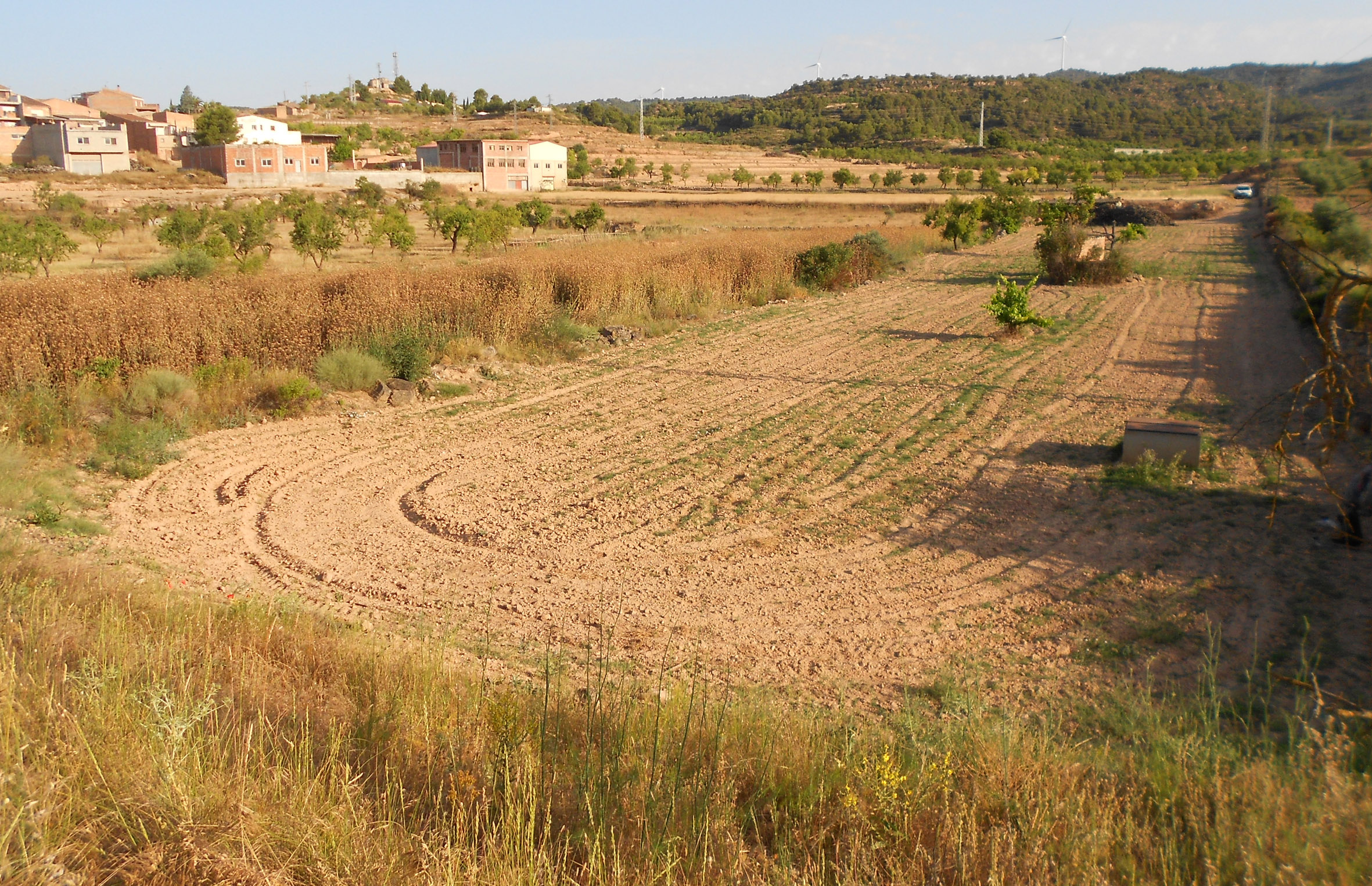
The view towards the well – centre – and Bovera village – left
So, once in place with all the necessary materials for building a modest drinking pool – a roll of heavy duty black plastic liner, old discarded clothes, burlap (bought on the internet and sent from India), cutter, spade, pick-axe, hoe, string, tape measure – I was alone before the beast of doubt. What shape should the pool take? How deep? How would I stabilize the margins? Should I try and incorporate plants? Is there any need for an overflow? And so on.
Well, here are some photos from that very first day (and later), when there were more doubts than realities.
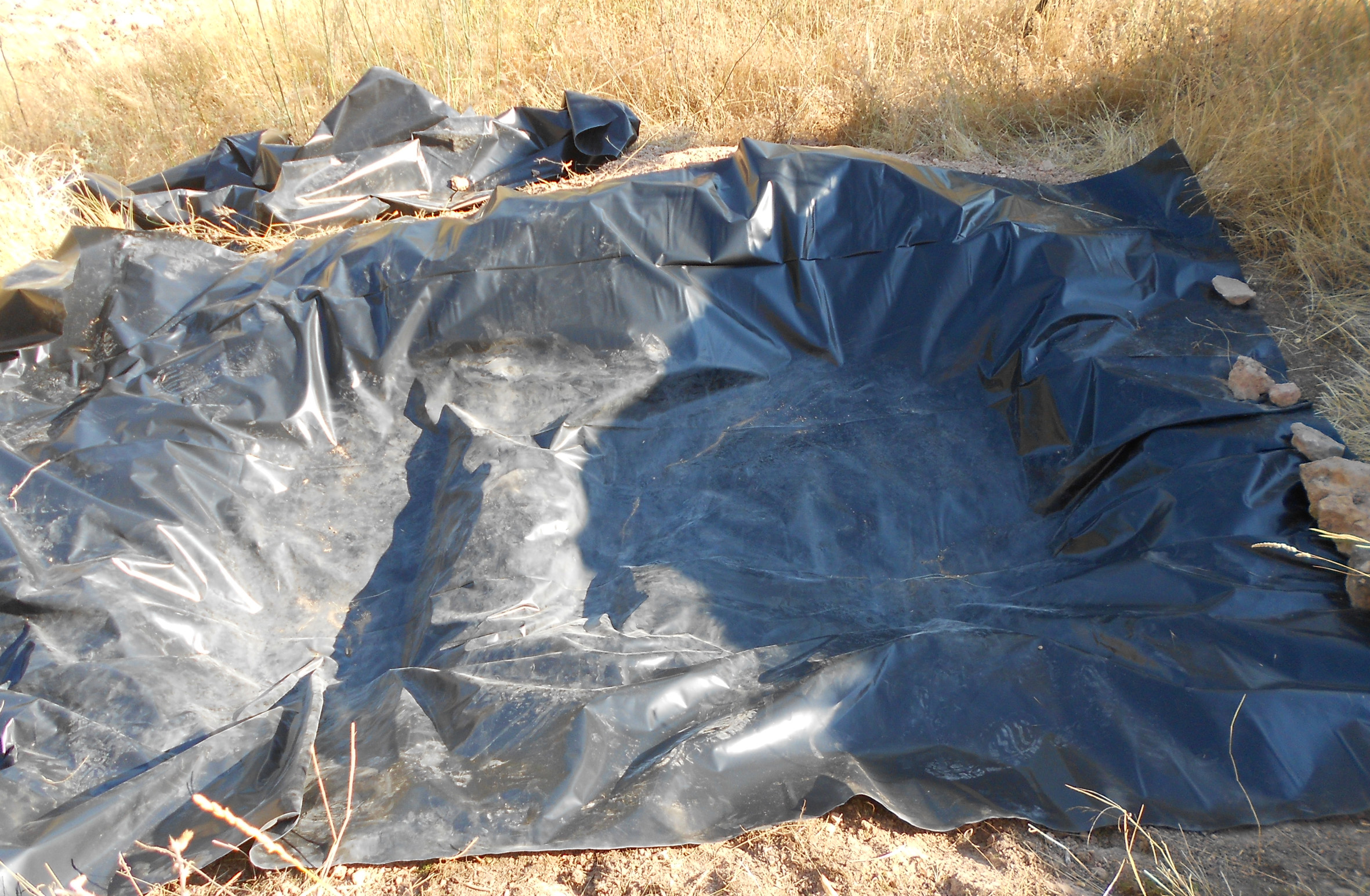
New drinking pool in the making I
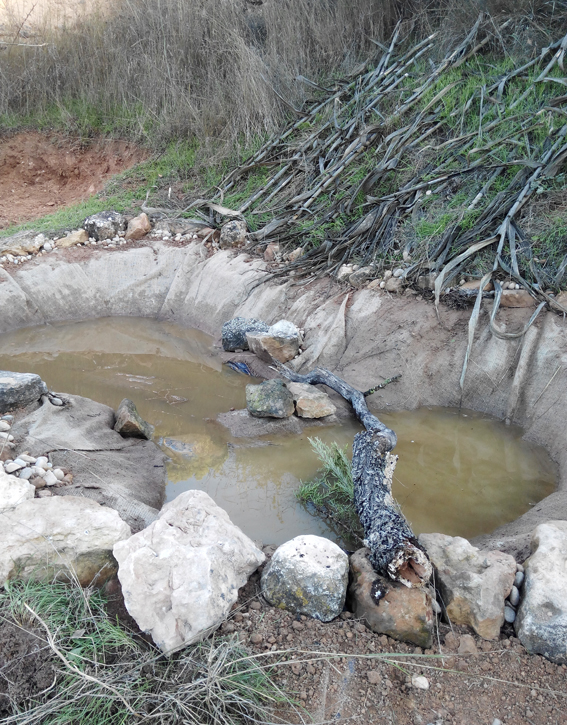
New drinking pool in the making II
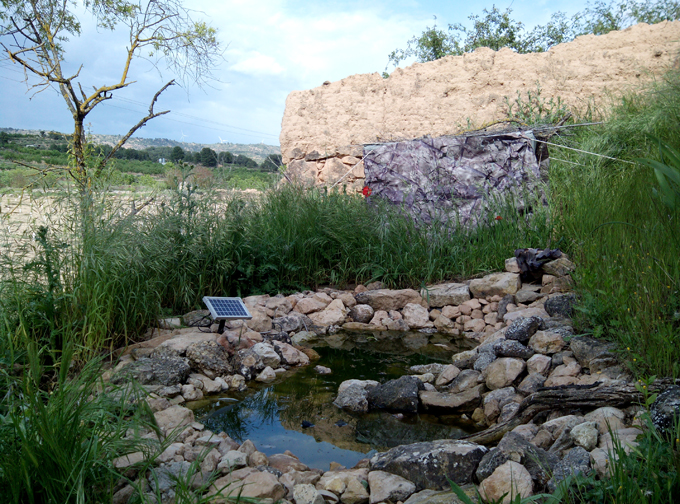
New drinking pool in the making – the finished product?
That was almost three years ago. In that time the pool has been a focal point for much of the local wildlife, in particular birds, but also the odd toad, timid nocturnal badgers, foxes and stray dogs, dragonflies, bees and wasps, and mosquitoes. Damn the mosquitoes.
I also set up a hide, rescued from the days when we dealt directly with international photographers on the Lleida plains, coming to photograph Little Bustards, Little Owls, Stone Curlews and the like. However, after two years of accustomization the birds are fine with it, but I have yet to find the time to get in there and take some photos or videos! The trail cam, however, did much of the job for me, and after the first session of going through about 2,000 photos I proudly declared that we had already had 30 species of avian visitors to the pool, and that was even before the spring migration period had started. At that time Hawfinches were everywhere, and the pool was no exception, but the camera also recorded one of only two records of Brambling for the village, this one a fine male coming out of winter plumage. However, for me the most enjoyable scenes were the starlings, both Spotless and Common, which made a regular appointment in the early afternoon, to come down, drink, bathe and socialize in groups of 5, 10, 20 or more, before continuing the party by flying off to the roofs and the village church for the end of the day chatter and sing-song.
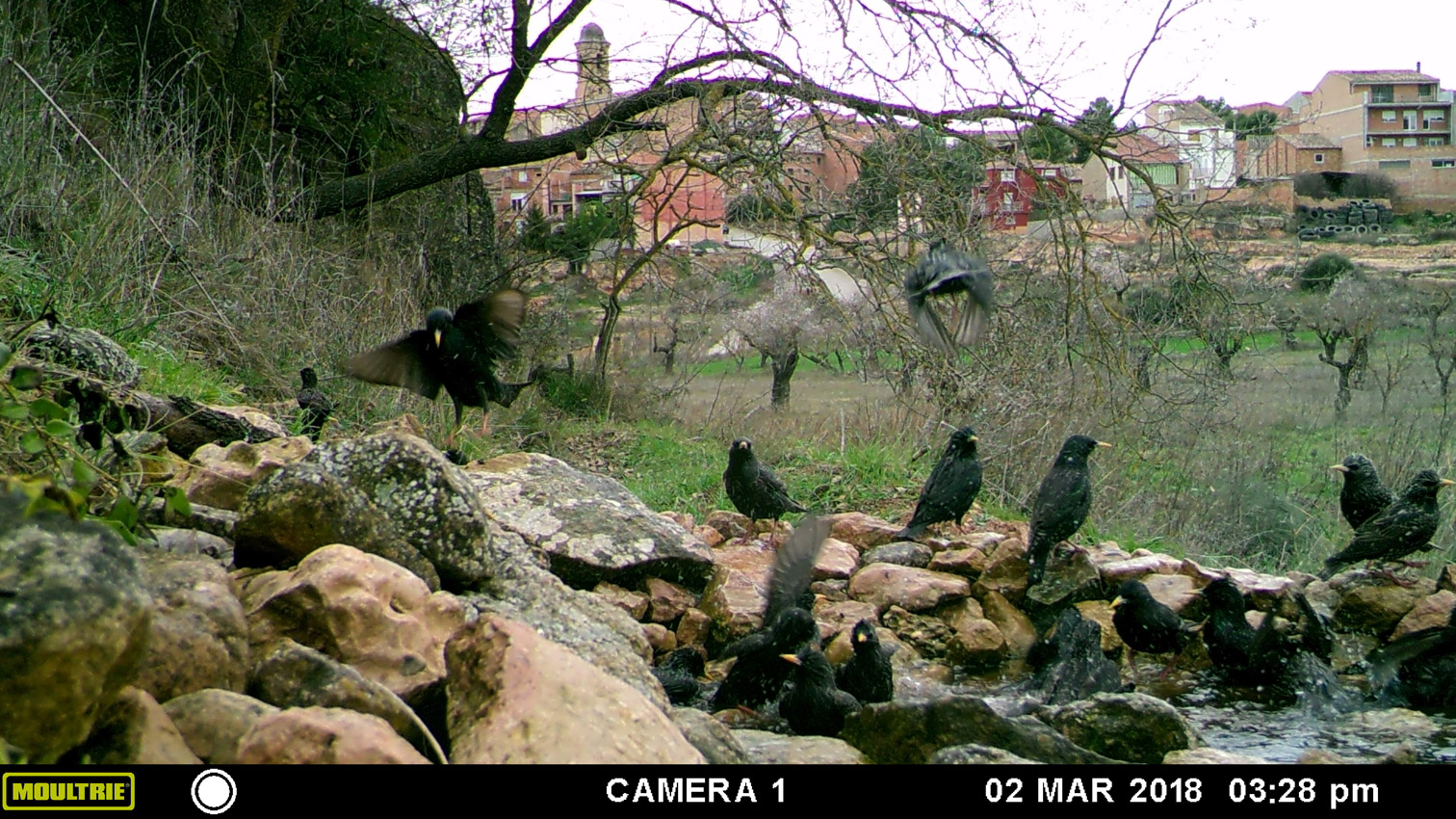
Starling festival at Bovera I
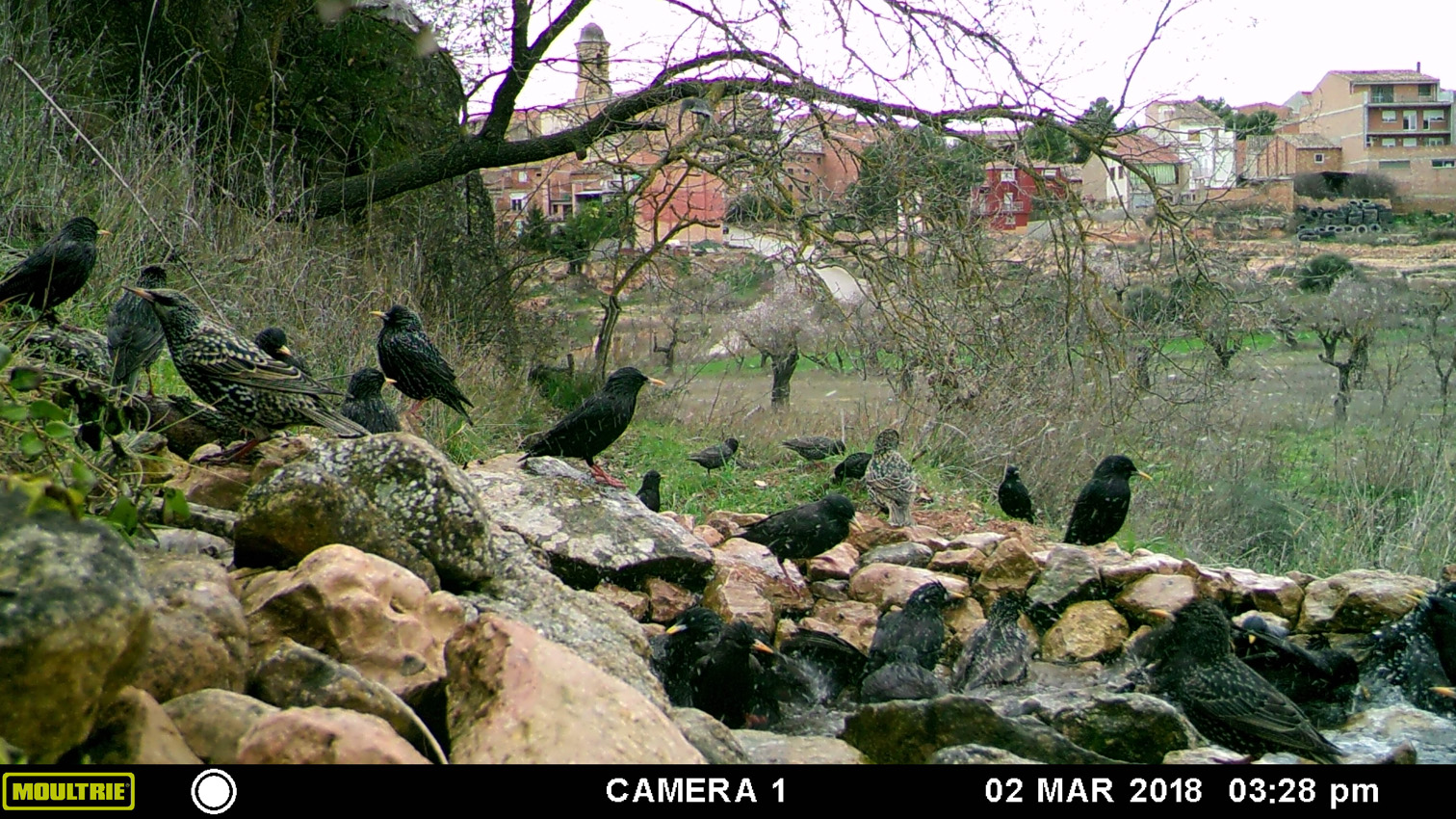
Starling festival at Bovera II
Next post: Figures of 8 – Pool-making considerations for humans
Being a local bird tour specialist – both agency and guide – must be like being an actor – you can’t escape first-day nerves and uncertainties.
Will the Wallcreepers be there at the first site?Will everyone get to see them? Or will we have to use one of the back-up sites and bear the weight of undelievered expectations until a Wallcreeper finally flutters into view?
Can the forecast be trusted? Will it really rain on Tuesday, or should we go ahead with our original itinerary?
Will everyone in the group be in shape enough to make the walk to the entrance to the gorge?
And so on. Until you walk onto stage, move into gear, and flow with the motion, letting the years of experience do their thing while you get that nagging voice of doubt to sit down and shut up. Under promise, over deliver. Let the group dynamics furnish most of the input, just add a drop of oil now and then on a few rusty spots. And above all, let people enjoy themselves – they’re on holiday, after all – whether it’s with rare Wallcreepers or abundant Griffon Vultures.
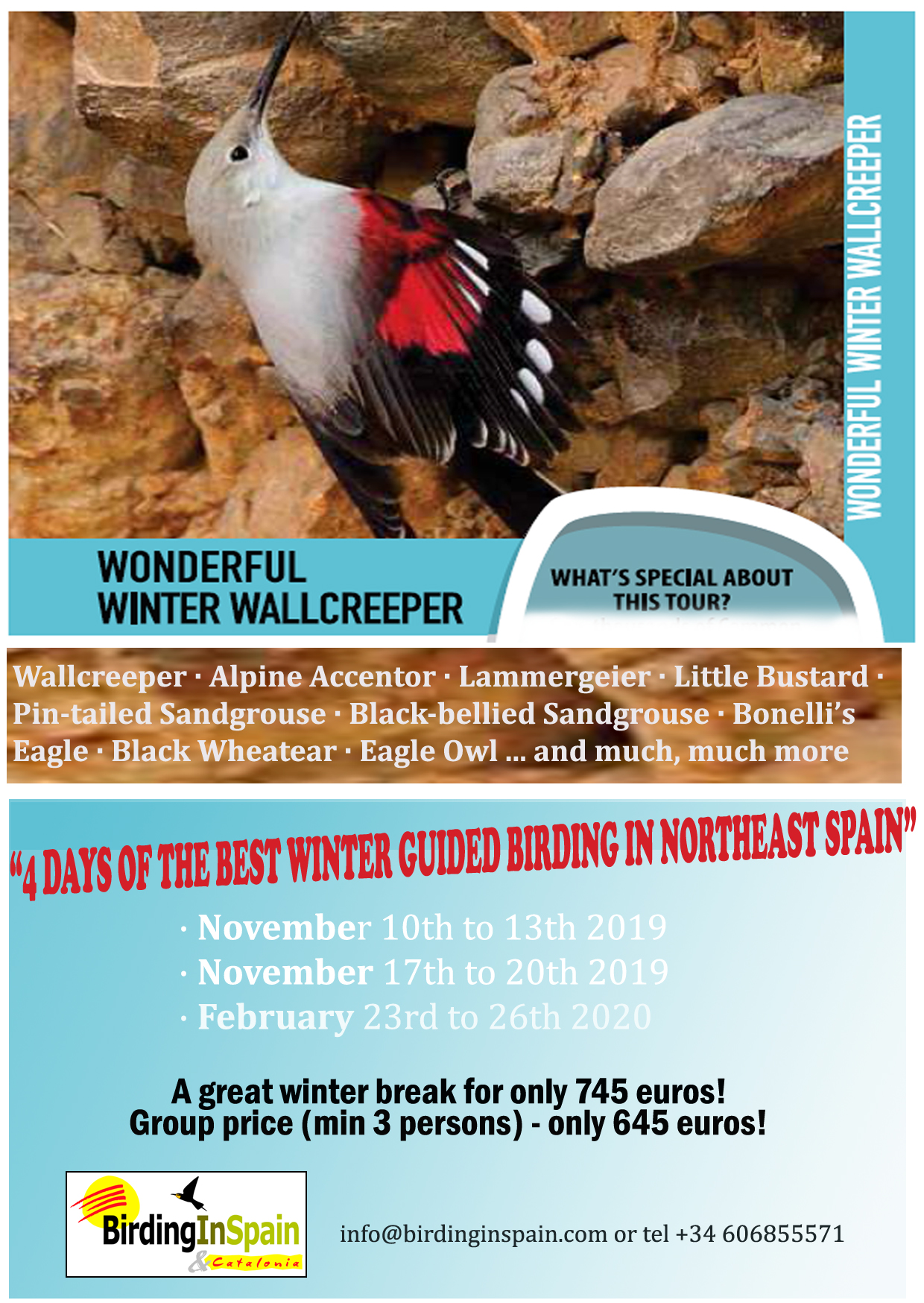
Wonderful Winter Wallcreeper Tour
You can join us on one of these Wonderful Winter Wallcreeper Tours in November 2019 or February 2020. It’s an interactive performance.
For a long time now I’ve shared the widely-held belief that July and August are not months for birding in, especially in Spain, where daytime temperatures can surpass the 40ºC mark. Nevertheless, when there’s work to be done it’s a case of don the cap, smear on the suncream, and dust off the binoculars. And trust in the car’s air-conditioning too!
However, there is another way. And it’s probably the best. Get up with the sparrows, no later, and get out somewhere nearby, take a walk when the temperatures are pleasant and bird activity is at its highest. If you get back to the car more or less at the time when the birds start panting you’ve probably timed it to perfection!
Furthermore, you’ll have done a good portion of the day’s necessary exercise, and a good siesta after a delicious lunch is perfectly justifiable!