Heatwave!

Golly Gosh!

 Birding with Steve

Currently we are suffering another heatwave here in Spain, with today’s temperatures reaching 41ºC around Lleida and in other parts of the Ebro Valley. Most sane people spend their time indoors, not coming out until the evening, when things cool down enough to walk around the neighbourhood and maybe enjoy a meal or a drink on a terrace somewhere. Others take refuge by the pool, or the beachside.

However, some of us have that obsession called birding. And when some of us go abroad we want to see some new birds, whether the month be a Saharan August or an Antarctic January. This month we’ve already had 5 visitors from northern Europe looking to get a bit of birding in during their summer hols in Spain. The idea is admirable, but how do you cope with hairdryer heat that races up into the 30’s before you have time to digest the first excting sightings of the day? And how do you expect to handle the afternoon haze, heat and drowsiness that you know is in store? Here’s some advice that we think is sound. Well, sound enough for anyone who is inclined to go out looking for birds in Spain during a heatwave!

Make sure you have plenty of cool water with you. A couple of litres per person is not excessive. So that means a single big bottle per person or lots of those piddly little bottles that seem so convenient to pop into your backpack, but which are little more than tongue-wetters. Dehydration is a serious issue, and one that many northern Europeans take too lightly.

How to keep the water cool, and for free? Well, not for free, if you want to know you’ll have to send us an e-mail to ask for our secret. We will tell you that it really works a treat.

Suncream, of course. A couple of times a day.

Plan your route. Are you looking for altitude birds? A difference in altitude of 1,000 metres can mean a gasp-saving difference of 10ºC. That’s a “tolerable” 30ºC compared to an opressive 40ºC. So if you can get up high plan to be there around the hottest part of your birding day.

Get up early and be on-site for just after dawn. That’s when it’s coolest, and best for you and for the birds. Eat breakfast late, standing up or before you leave home.

Plan for a late lunch, and not a picnic lunch! Rather go to a nice cool air-conditioned bar, sit and relax and enjoy your food and drink in the knowledge that you have already done all or most of your day’s birding. Most bars and cafés will serve you sandwiches and snacks throughout the day, so there’s no sense in stopping birding at noon to have lunch when you can still bird comfortably until around 2 pm. Birding at 4pm is only for those who know or can do no better.

If your program will allow it take a siesta between 4pm and 7 pm, and then explore the possibility of a spot of late evening birding as the temperature starts to drop.

Park your vehicle in the shade whenever possible. Open the windows before getting back in, drive with them open and the air-conditioning on for a while before closing them and letting the air-conditioning take control. What - you haven’t got air-conditioning?! Then see the advice on the use of horse and carts.

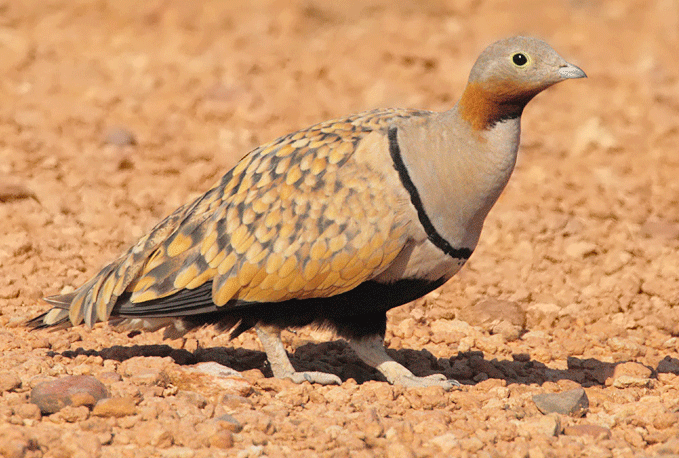
 Black-bellied Sandgrouse seen when birding in Spain

Black-bellied Sandgrouse can cope with a heatwave, but can you?

Popularity: 3%

Review: Catalan Winter Bird Atlas

Recently

we were asked to review the superb Catalan Winter Bird Atlas for the journal Ibis. Here is the review as it appears in the latest number of the “International Journal of Avian Science” Ibis (2012), 154, 414-434.

Ibis, the International Journal of Avian Science

HERRANDO, S., BROTONS, L., ESTRADA, J., GUALLAR, S. & ANTON, M. (eds) Atles dels Ocells de Catalunya a l’Hivern 2006–2009 – Catalan Winter Bird Atlas 2006–2009. 649 pages, numerous colour maps, photographs, graphs, other illustrations (in colour and black and white), tabulated data in 3 appendices. Barcelona: Lynx Edicions in association with Institut Catala` d’Ornitologia, 2011. Website: http://www.lynxeds.com.

A first generation bird atlas: 1984 saw the publication of the first bird atlas for Catalonia, edited entirely in Catalan and titled Atles dels Ocells Nidificants de Catalunya i Andorra (reviewed in Ibis 128: 151–152). It used 10-km square grid maps to show the presence of breeding birds, with different-sized dots representing definite, probable or possible breeding.

The second generation: after many years of work in both field and office, the Catalan Breeding Bird Atlas 1999–2002 was published in 2004, 20 years after the first one. Its pages reflected the work of no fewer than 516 people, both volunteers and professionals, and represented a great evolutionary step in the organization of Catalan field ornithology. It was rightly acclaimed as a landmark publication for Catalan ornithology and was described by reviewer Paul Donald (in Ibis 147: 617– 618) as one of his ‘top ten’ bird atlases.

And now a third generation bird atlas? That’s what some are saying about the Catalan Winter Bird Atlas 2006–2009, including EBCC chairman R. P. B. Foppen in his Foreword, adding that it ‘creates a new standard in the world of bird atlases’. By building on the experiences of the 1999–2002 Atlas, which in turn set horizons far beyond the scope of the first – collating abundant data from diverse sources, and then applying an exhaustive, state-of-the-art analysis to produce detailed distribution maps showing relative abundance or probability of occurrence using density contour maps as the graphic base – the Catalan Ornithological Institute has been able to progress even further and, what’s more, the relatively short gap between publication of the breeding and wintering atlases adds substantially to the scientific and documentary value of both.

 Catalan Winter Bird Atlas

Surely one of the first thoughts that would strike anyone considering compiling a winter bird atlas is that it is no easy undertaking: harsh weather, often limited access to mountainous regions, the difficulty of representing changing distributions of bird species between and within winter periods, motivating and coordinating skilled field workers and volunteers, etc. That the Catalan Ornithological Institute has been able to do just that and more, with the participation of 885 people, the incorporation of diverse and sometimes dispersed data from atlas fieldwork, long-term monitoring schemes such as the Common Bird Census (SOCC), various ringing schemes, ornithological yearbooks, hunting statistics, waterbird censuses and so on, must be taken as some measure of the region’s keen ornithological aspirations.

Of the 318 bird species detected in the study period, 206 wintered regularly. By incorporating a wealth of maps, graphs, facts and figures, the book clearly illustrates the importance of the Mediterranean basin as one of the main wintering areas for many of the birds that breed in central and northern Europe. Its accurate, fine-grained distribution maps are viewer-friendly and easy to interpret. Plentiful graphs showing population trends, altitudinal and habitat preferences adorn the species accounts. For some species of an irruptive nature such as Goldcrest Regulus regulus, Hawfinch Coccothraustes coccothraustes or Yellowhammer Emberiza citrinella, there are even additional abundance maps comparing different years within the period. An attempt has also been made to ascertain the origin of some birds detected in the winter by using ringing recoveries wherever available.

English summaries in the species accounts are carefully drafted to ensure that the essential information on population estimates, distribution and temporal trends is included. In fact, this abridgement is virtually the only concession to layout and design in what is an essentially bilingual publication.

The atlas of winter birds boasts skillful bird illustrations of all the main species in winter habitats and plumages, an extensive section on habitats with photographs and full descriptions of each, and introductory sections on winter weather, the methodology of data gathering and analysis, as well as additional species accounts for exotic or introduced species, and condensed versions for regular and irregular very rare species.

Catalan Winter Bird Atlas page layout and illustrations

This is a robust book, both in appearance and content, and in my opinion to place this alongside its breeding birds equivalent as one of the top 10 bird atlases would be too conservative an appraisal. More than just another bright feather in the cap of the Catalan Ornithological Institute, it is a monument to Catalan ornithology and citizen science, and is capable of standing up to any challenge put to bird atlases around the world up until the present day. Any organization contemplating the elaboration of its own country’s or region’s bird atlas should regard it as an essential early reference. Beyond that, it is a delight to possess in itself, but not a book to be lent to one’s friends without first demanding a receipt.

ª 2012 The Authors

Ibis ª 2012 British Ornithologists’ Union

Popularity: 6%

Watching Migrants Leaving Spain

Tarifa, September 2011

From the 4th to 10th September I was leading the Ornitholidays tour “Tarifa at Leisure” . That meant staying in just one hotel, the lovely Palomar de la Breña, for the whole week and making sorties to watch the migrants crossing the straits and to look for other local avian goodies.In some 5 sessions of raptor watching we spotted Rüppell’s Vulture (1 juvenile, with a possible second that had to remain just “possible”), 2 Goshawks, 1 Bonelli’s Eagle, dozens of Egyptian Vultures and Griffon Vultures, More than 20 Black Storks, dozens of Short-toed Eagles, more than 200 Booted Eagles, hundreds of Honey Buzzards, a dozen Montagu’s Harriers, Sparrowhawks, Lesser Kestrels and flocks of hirundines and Bee-eaters.

Juvenile Rüppell’s Vulture, Gyps ruppellii

A Western Olivaceous Warbler, 3 Black-winged Kites, almost 20 Collared Pratincoles, Iberian Chiffchaff, White-headed Ducks and a Monarch Butterfly were some of the other highlights of an interesting week spent at the other end of this country called Spain.

Watching raptor migration at Tarifa

It wasn’t always easy to keep our eyes on the raptors…. 

Popularity: 8%

Birding In Spain newsletter

We’re working hard to make sure you’re well informed before coming birding in Spain.

Birding In Spain

The summer edition of the Birding In Spain Birds and Birding Newsletter is available here.

Just click on the BIS logo or on this link to download the latest Birds and Birding Newsletter Summer 2011

The sections include:

Catalonia Bird Tour News - who, where and when?

Birders Like You - an engaging new section where visiting birders are the protagonists

 Birders like you

Bird News - from Catalonia. Red-footed Falcons, Little Bustards and more.

Birding In Spain Video Channel - we have almost 20 videos on our new You Tube channel. All birds, of course! Hoopoe, Montagu’s Harrier, a really entertaining pair of Little Owls and much more.

Bird fair auction - see what we are offering at the Bird Fair auction this year

Winter tours - explains the delights of winter birding in northeast Spain

Seawatching excursions - Balearic Shearwaters, Pomarine Skuas, and what else?

Best Accommodation for birders - don’t mess up your holiday by choosing the wrong place to stay. Take our informed advice. It’s free.

Accommodation for birders in Spain


Popularity: 6%

Aus Marines a Catalunya

Participants en el curset “Aus Marines a Catalunya” organitzada per l’UGT 

Els dies 7, 8 i 9 de juny vam estar amb L’UGT - Agents Rurals com a ponents d’un curset d’identificació d’aus marines de Catalunya.

De fet el primer curs d’aus marines es va fer l’any passat des de Salou, durant el mes de maig. Es veu que hi havia molta demada i així vam tindre la sort de poder repetir enguany.  

En total els 20 participants vam passar unes 20 hores aprenent sobre la biologia i l’identifació de les aus marines de Catalunya. Segurament, però, la part que ens va agradar més eren les 2 sortides que vam realitzar des del port de Tarragona. Vam tindre la sort de gaudir de bon temps, a pesar de les previsions més pessimistes, i vam acabar amb una llista d’espècies molt semblant a la de l’any passat: Ocell de Tempesta, Baldriga Mediterrània, Baldriga Balear, Baldriga Cendrosa, Paràsit Cuaample (és una cita força tardana o només ho sembla a mi?), Paràsit Gros, Paràsit Cuapunxegut, Mascarell, Xatrac Bec-llarg, Xatrac Comú, Corb Marí Gros, Corb Marí Emplomallat, Gavina Corsa, Gavina Riallera, Gavià Argentat de Potes Grogues, Gavià Fosc. I dues espècies noves: Fumarell Negre i Bec d’Alena!

Veure l’article original aquí

Popularity: 4%

Wild Images comes to Lleida

FROM

the 8th to 15th May we received the first group of photographers from Wild Images. Wild Images, a daughter company of Birdquest, came with leader Mike Watson and 6 avid bird photographers from different parts of the UK. 

Little Owls, Athene noctua.

They followed the basic outline of our Great Photo Trip (see details here) with 3 days on the plains of Lleida and 2 in the Lammergeier hide in the Pre-Pyrenees.

Apart from Lammergeiers and the other 3 species of vulture they also managed to get excellent shots of a wide variety of birds on the steppes, in magnificent spring scenery. Jumping Little Bustards, Bee-eaters, Stone Curlews, Montagu’s Harriers, Iberian Grey Shrike, Corn Bunting and even a last minute Hoopoe! Still, in my opinion it was the Little Owls that really stole the show. 

Bee-eaters, Merops apiaster.

Did they leave with smiles on their faces and giving us the thumbs up? Well, yes. And if you want to see some of the great photos they took then you need do no more than click on these links to their own websites:

Mike Watson (Wild Images leader)

Eric McCabe (with wife Lesley hailing from Scotland)

David Mercer

Congratulations to all! We’re looking forward to next spring already.

Popularity: 4%

Plain sailing

Quail

Quail, Coturnix coturnix.

A Quail sat in the track in my car headlights just before dawn

Bee-eater

Bee-eater, Merops apiaster.

The Bee-eaters in front of the hide were bright and good afternoon entertainment

Little Owl

Little Owls, Athene noctua.

The Little Owl antics usually steal the show.

Thekla Lark

Thekla Lark, Galerida theklae

Singing Thekla Lark was an added bonus from the Hoopoe hide. 

Monty’s Harrier

Montagu’s Harrier, Circus pygargus.

Poppy landscape

Poppy Landscape, Lleida.

Now that’s not bad for a (very early) morning or two out on the plains of Lleida.

Popularity: 4%

Lammergeiers and Black Vultures

A couple of flight sequences from some months back. In the Pre-pyrenees of Lleida.

Black Vulture, Aegypius monachus, in flight

Black Vulture, Aegypius monachus, in flight

Black Vulture, Aegypius monachus, in flight

Black Vultures have bred there now for the second consecutive year and seem to be on the way to repaying the efforts at re-establishing the species in this part of Spain.

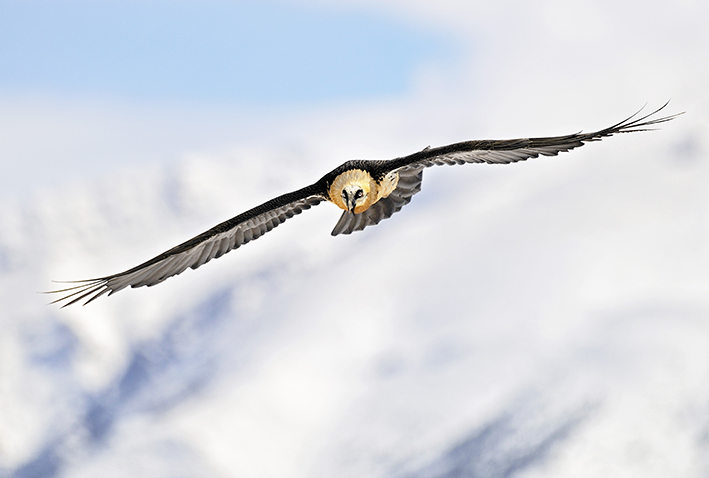
Lammergeiers, Gypaetus barbatus, in flightLammergeiers, Gypaetus barbatus, in flight

In the last year or so some Lammergeiers have been observed outside their normal range in the Pyrenees. It is well known that vacant territories for this species in the Pyrenees are hard to come by, so perhaps this is a forced response by this normally sedentary species.

Lammergeiers, Gypaetus barbatus, in flight

One slightly worrying aspect about the latter species is that a couple of adult birds have been found dead, the cause of death having been lead poisoning. This fact is of great relevance to feeding stations: they are strongly advised not to put out animals that have been shot (boar, deer, etc), as if the bullet is not removed from the corpse within five minutes of entering the body the lead spreads around the body and can end up in Lammergeiers and other vultures.

Let’s hope they take note.

Popularity: 3%

Birds as art?


I don’t know how far people in the know go these days to define art, but here’s a minor contribution to the debate.

White Wagtail Motacilla alba

And another one:

Red-billed Chough Pyrrhocorax pyrrhocorax

And another:

Red-billed Chough Pyrrhocorax pyrrhocorax

This one’s not art, it’s about Choughs…

Red-billed Choughs Pyrrhocorax pyrrhocorax

You could hang this one upside-down and it would be the right way up. Now isn’t that cool?

Whinchat reflection Saxicola rubetra

This one invites comment… I said “This one invites comment”….No?

Bird dream


Popularity: 4%

Free 2011 calendar for birders

2011 birding calendar from Catalonia

Dani Valverde and Joan Morales are the bird and nature photographers who have generously shared their work and love of nature with the international birding community.

Just click on this link and then follow through to download their 2011 calendar, illustrated with birds like the Yelkouan Shearwater, the Snow Finch, the Pectoral Sandpiper, and more. There’s more than just birds however, as the exuberant Apollo butterfly also manages to collar a month, as does a Red Fox. 

2011 birding calendar from Catalonia

The calendar is written in Catalan and English.

Popularity: 4%